

The Gospel of the Buddha : ค้นหาหนังสือธรรมะ หน้า 10 / 76
หน้าหนังสือทั้งหมด
59
The Importance of Chanting in Buddhism
your mind will clear and be open to receive merit. Your thoughts, speech, and action will not be led astray by temptation.
Performing Vatta serves constantly to remind us of the virtues of the Triple
Chanting in Buddhism plays a crucial role in enhancing faith and preserving teachings of the Buddha. It reminds practitioners of the virtues of the Triple Gem and helps them avoid temptation. Historic
88
Bibliography of Buddhist and Linguistic Resources
Bibliography
Devlin, Joseph. A Dictionary of Synonyms and Antonyms. 2d ed. New York: Popular Library Inc., 1961.
Guralnik, David B. Webster’s New World Dictionary: Compact School and Office Edition.
This bibliography compiles crucial references for understanding Buddhism and language, featuring dictionaries such as 'Concise Pali-English Dictionary' and 'Webster’s New World Dictionary'. The works
5
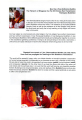
The Harmonious Teachings of Buddhism for a Peaceful World
Most Ven. Zhi-ji Ahdharman Buddha
The Patriarch of Bhagawan Gu Fan Mi Chiness Han Transmission
Thatrayana Buddhism
"The World Buddhist Sangha Youth is like the sun rising at the early dawn in the eas
The World Buddhist Sangha Youth symbolizes a rising force within Buddhism, promoting harmony and unity across various traditions such as Theravada, Mahayana, and Tantrayana. The teachings conveyed emp

16
Dissemination of Buddhism and the Noble Eightfold Path
Part 2
The Theory
What does it mean to disseminate Buddhism ?
Dissemination of Buddhism
↓
The Lord Buddha’s Teachings
↓
Reside in the Mind of Every Individual
↓
Practice Them until They Become habits
The dissemination of Buddhism involves instilling the Lord Buddha’s teachings into the minds of individuals so they can practice these teachings as habits. Central to this process is the Noble Eightfo
29
Perfections in Buddhism: Understanding the Ten Perfected Virtues
บาลี (parami) 'Perfected Virtues'; 'Perfections'; transcendental virtues
บาลี ๑๐ ทัศ Ten Perfected Virtues (Ten Perfections) consisting of generosity, self-discipline, renunciation, wisdom, patience,
ศึกษาความสำคัญของทัศ 10 ประการในพุทธศาสนา ซึ่งประกอบด้วยความเอื้อเฟื้อ, การมีสติ, การสละ, ปัญญา, ความอดทน, การเพียรพยายาม, ความจริงใจ, การตัดสินใจ, ความเมตตา และความเป็นกลาง การปฏิบัติตามทัศเหล่านี้เป
75
The Early Years of the Buddha
www.dharmmakaya.or.th
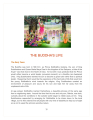
THE BUDDHA'S LIFE
The Early Years
The Buddha was born in 566 B.C. as Prince Siddhattha Gotama, the son of King Suddhodana and Queen Maha Maya Dewi in the kingdom of the Sakyans,
The Buddha, born as Prince Siddhattha Gotama in 566 B.C., was the son of King Suddhodana and Queen Maha Maya in the Sakyans kingdom of North India. Predicted to become either a world leader or a Buddh
26
The Story of Five Hundred Boys
24 Clear-minded Youths - 3 The Story of Five Hundred Boys
Now the Buddhas cherish no sentiments of ill-will or hatred towards any man; therefore the Buddha spoke thus. And having thus spoken, he went
In this story, youths demonstrate their admiration for Venerable Maha Kassapa by offering him cakes instead of the Buddha and other monks. Their actions lead to discussions about favoritism in giving

95
Stories of Enlightenment and Wisdom
The Story of Prince Abhaya
The Story of Monk Sammunithera
The Story of Monk Anulamitra
The Story of Venerable Gela
The Story of Thirty Gela
The Story of Cinnamana Vyasa
The Story of Ananda
The Story o
This compilation presents various stories, including the profound narratives of Prince Abhaya, Monk Sammunithera, and the key teachings of the Buddha related to temptation and enlightenment. Each stor
37
Historical Studies on Buddhism and Ancient India
1995a “The Dates of the Buddha and the Origin and Spread of the Theravāda Chronology.” When did the Buddha Live?: The controversy on the Dating of the Historical Buddha (Selected Papers Based on a Sym
This content features important scholarly works related to the historical dating of the Buddha and significant ancient figures such as Antiochus and Asoka. The controversy surrounding the historical B

40
Die Verfeinerung des Geistes und seine Erfahrung
Your inner experience is the same;
each the point that you feel contentment
more easily, more refined.
Refined means your mind is fine at a certain level,
though your experience is the same.
Looking a
Dieser Text behandelt das Konzept der inneren Erfahrung und ihren Einfluss auf das Empfinden von Zufriedenheit. Während die Erfahrung einer Person konstant bleibt, kann die verfeinerte Gestaltung des
16
Congratulations on the 55th Anniversary of Wat Phra Dhammakaya
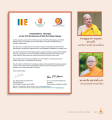
Congratulations Message
on the 55th Anniversary of Wat Phra Dhammakaya
On this auspicious occasion of the 55th Anniversary of Wat Phra Dhammakaya, the World Buddhist Sangha Youth (WBSY) and the World
On the 55th Anniversary of Wat Phra Dhammakaya, the World Buddhist Sangha Youth (WBSY) and the World Alliance of Buddhists (WAB) congratulate the temple for its enduring impact on Buddhism globally. B
21
The Inaugural Teaching of the Buddha
He agreed to teach the Dhamma, but remained undecided as to exactly who he should teach first. Eventually, the Bud- dha decided to make the journey to teach the ‘Group of Five’ [pañcavaggiya] who were
The Buddha decided to teach the Dhamma starting with the Group of Five at Isipatana Deer Park. His first sermon, the Dhammacakka pavattana Sutta, serves as a crucial teaching, symbolized by a royal ch
24
The Path of Self-Mortification in Buddhism
2. The Path of Self-Mortification
According to the Buddha, the practice of self-mortification [attakilamathānuyoga] is fruitless. He said that it is not a practice in keeping with the tenets of Buddhi
In Buddhism, the practice of self-mortification is deemed fruitless by the Buddha. He elucidates that these practices, such as lying on thorns and severe fasting, do not genuinely rid individuals of d
41
The Noble Middle Way in Buddhism
sense of security, but in the end, he will surely take advantage of us and leave us decapitated in the jungle.
It is for all of these reasons that the Lord Buddha taught that self-mortification is a n
The text discusses self-mortification as a non-Buddhist and dangerous practice, as taught by the Buddha. It emphasizes the importance of the Noble Middle Way, or the Eightfold Path, as the means to un
51
Understanding Suffering in Buddhism
depressed and dejected.
1.1.8 Feeling slighted [domanassa] : This is when one has a 'chip on one's shoulder' (to be aggressively sensitive about a particular thing or bear a grudge).
1.1.9 Bemoani
This text explores the concept of suffering as taught by the Buddha, outlining twelve types of suffering including feeling slighted, bemoaning losses, and separation from loved ones. It highlights how
54
Understanding the Origin of Suffering in Buddhism
2.2 The Origin of Suffering as a Cause
In explaining the Origin of Suffering, the Buddha intended to make clear that the suffering experienced by living beings has craving as its cause. As soon as the
In this examination of the Buddha's teachings, the Origin of Suffering is explained as being rooted in craving, which leads to a cycle of suffering. The relationship between the Origin of Suffering an
55
Understanding the Noble Truth of the Cessation of Suffering
sensuality. In this way, the Buddha shows the inter-relation between the Noble Truth of the Cessation of Suffering and the Noble Eightfold Path.
3. Explanation of the Noble Truth of the Cessation of S
This text delves into the Noble Truth of the Cessation of Suffering as per the teachings of the Buddha. It defines the Cessation of Suffering in four aspects - as release from the cycle of existence,
95
The Noble Truth of the Cessation of Suffering
The Noble Truth of the Cessation of Suffering
When the Lord Buddha had finished his explanation of the origin of suffering, he continued with an explanation of the cessation of suffering. The essence
This text explains the Buddha's teaching on the cessation of suffering, emphasizing the importance of extinguishing craving through the Noble Eightfold Path. It highlights that addressing the root of
155
King Asoka: Patron of Buddhism
by inviting 60,000 monks for alms in the palace daily. The king wanted to have the chance to pay respect to a fully-enlightened Buddha and with this end in mind, invited the Naga King to come up from
King Asoka was a pivotal figure in Buddhism, inviting 60,000 monks for daily alms and yearning to pay respect to a fully-enlightened Buddha. He invited the Naga King to appear as the Buddha for homage
197
The Middle Way: Buddha's Revolutionary Teaching
tered to liberate themselves from suffering, but because the strongest spiritual trend of the time was the practice of self-mortification, many went astray or perished in their quest. Having tormented
This text discusses the historical context of the Buddha's teachings, emphasizing how many were misled by the practice of self-mortification in their quest for liberation from suffering. It highlights